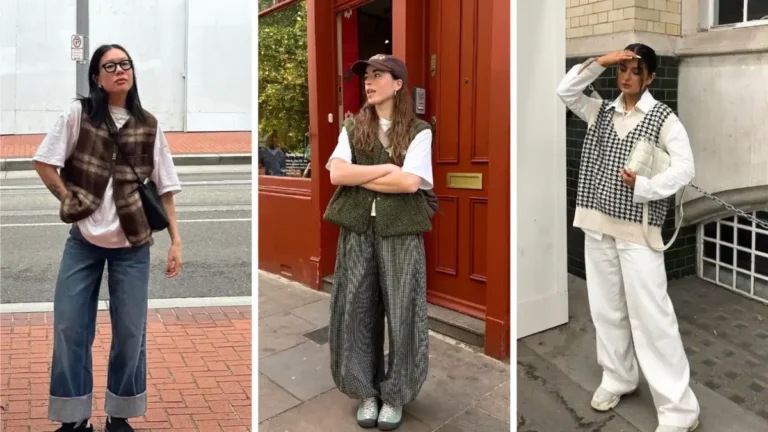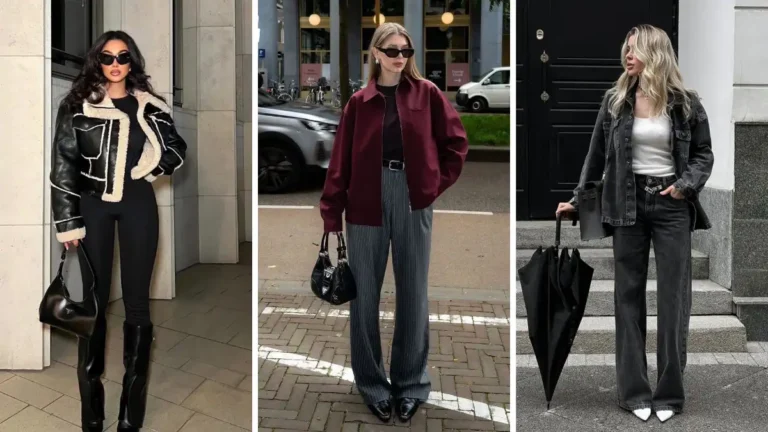
Pumpkin Patch Festival Outfits for Women Who Want Low Effort, High Style This Fall Season
A pumpkin patch outfit has to do more than look cute in a photo. It needs to handle dusty paths, uneven ground, changing temperatures, and at least a little walking without making you wish you had dressed differently. The good news is that high style does not require a complicated outfit or a pile of fall accessories.
The easiest looks use a simple base, one layer with texture, practical shoes, and a limited color palette that makes every piece feel connected. That balance matters because pumpkin patch festivals can shift from chilly morning air to warm afternoon sun.
Flexible layers let you adjust without losing the outfit’s shape, while denim, corduroy, suede, and ribbed knits create a rich fall mood. With the right formula, you can stay comfortable, look polished in photos, and avoid adjusting your clothes all day.
Pumpkin Patch Festival Outfits for Women Who Want Low Effort, High Style This Fall Season
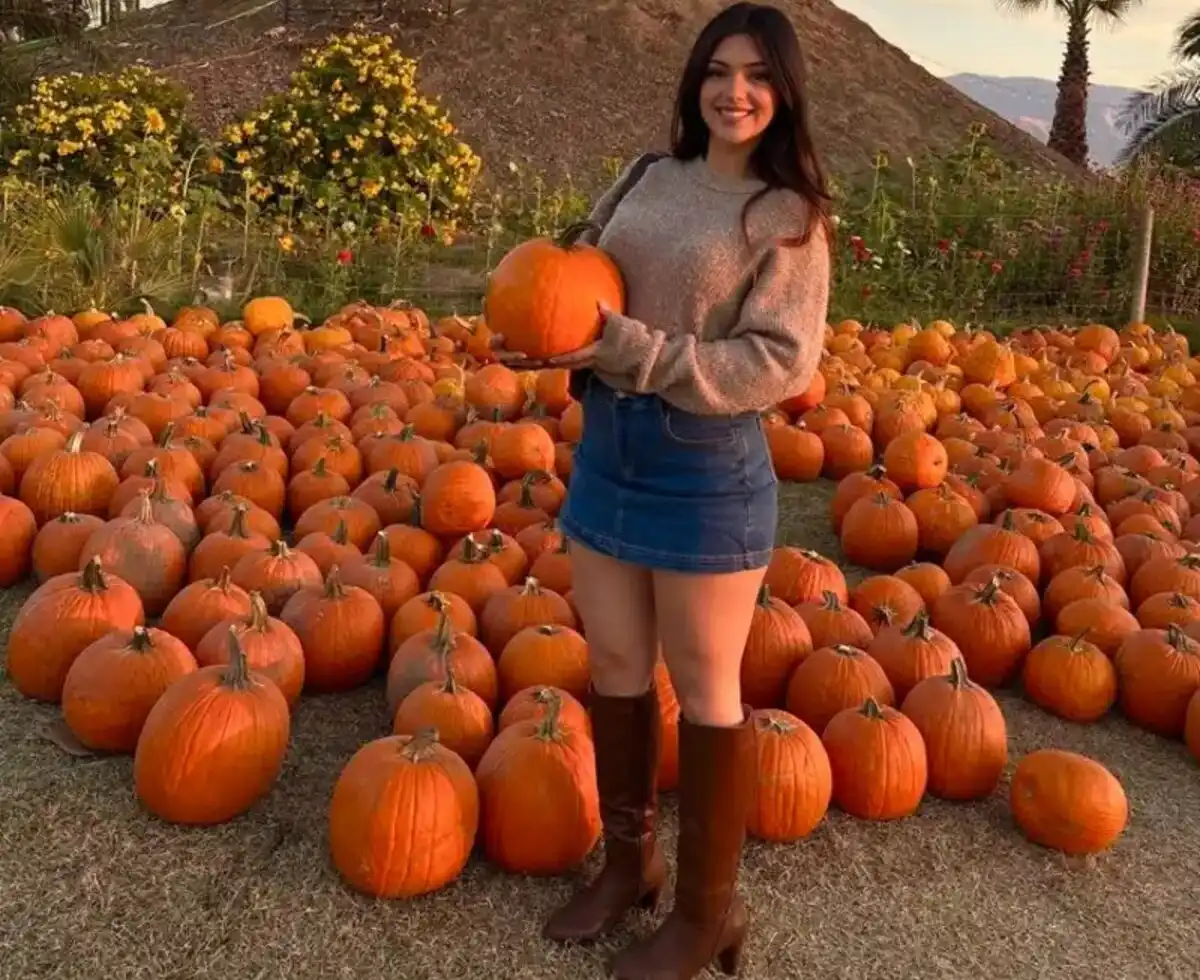
The Simple Formula Behind a Polished Pumpkin Patch Outfit
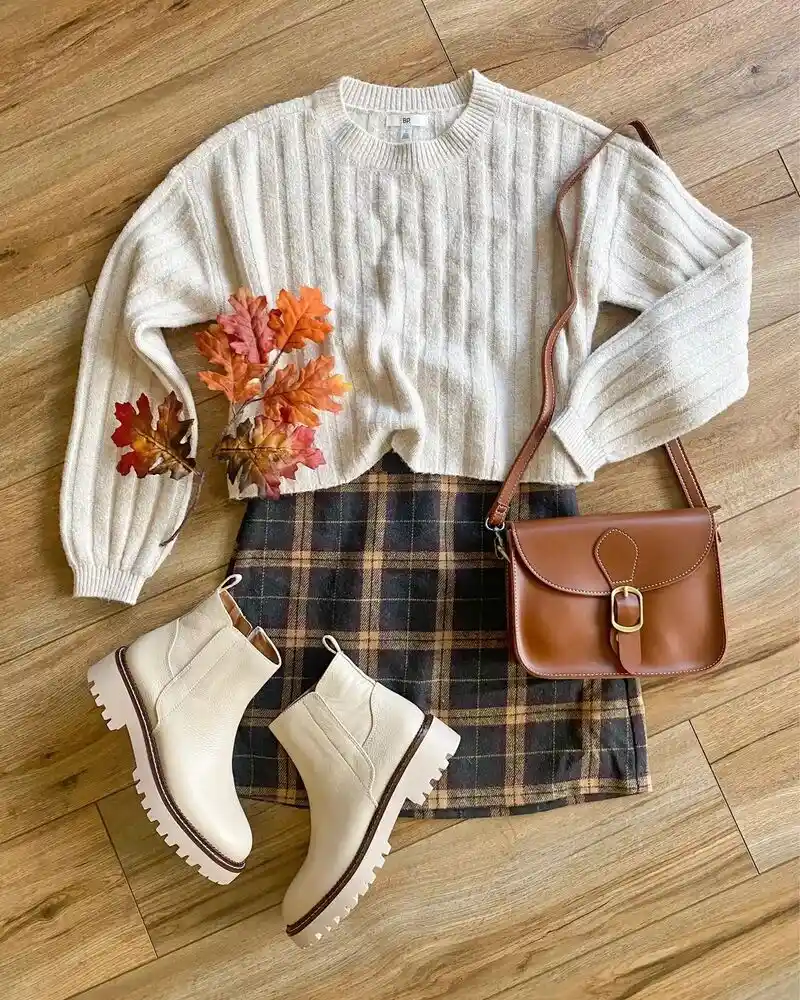
Start with one comfortable base, such as straight jeans, leggings, corduroy trousers, or a sweater dress. Then add a layer that gives the outfit shape, such as a cropped jacket, a relaxed cardigan, a quilted vest, or an open flannel shirt.
The final pieces should solve real problems. Ankle boots or sturdy sneakers make walking easier, while a small crossbody bag keeps your hands free for cider, pumpkins, and photos. The visual balance matters more than the number of pieces.
If the bottom half is relaxed, use a neater top or show some waist definition; if the sweater is oversized, keep the lower half slimmer so the outfit does not lose its shape.
1. Straight Jeans, a Ribbed Sweater, and a Suede Jacket
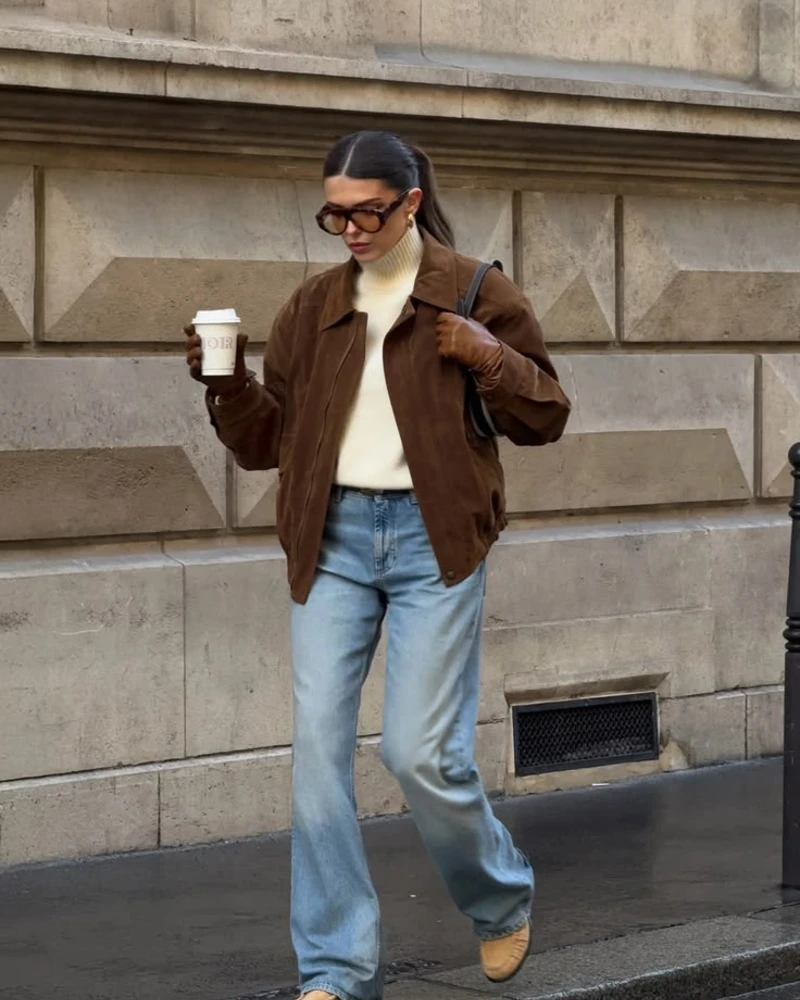
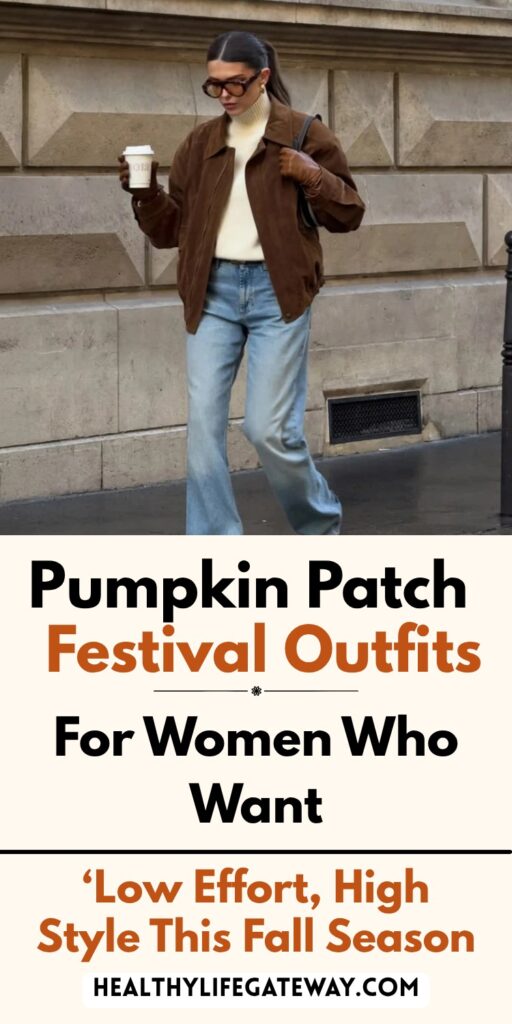
This combination is simple enough to assemble in minutes, yet it has enough texture to feel considered. Choose straight or gently relaxed jeans, then add a ribbed sweater that skims the body without clinging. A suede or brushed jacket introduces the soft, rich texture people associate with fall.
A waist-length or slightly cropped shape also stops the sweater and denim from reading as one long block. Warm brown ankle boots connect naturally with the jacket; an oatmeal, rust, cream, or muted green sweater keeps the palette seasonal without looking costume-like.
If the weather is mild, push the sleeves up slightly to reveal the wrists and give the outfit a lighter finish. This formula works because each item has a clear role. The jeans bring ease, the knit softens the look, and the structured jacket creates a clean outline that looks good from several camera angles.
2. Black Leggings, a Long Sweater, and Chelsea Boots
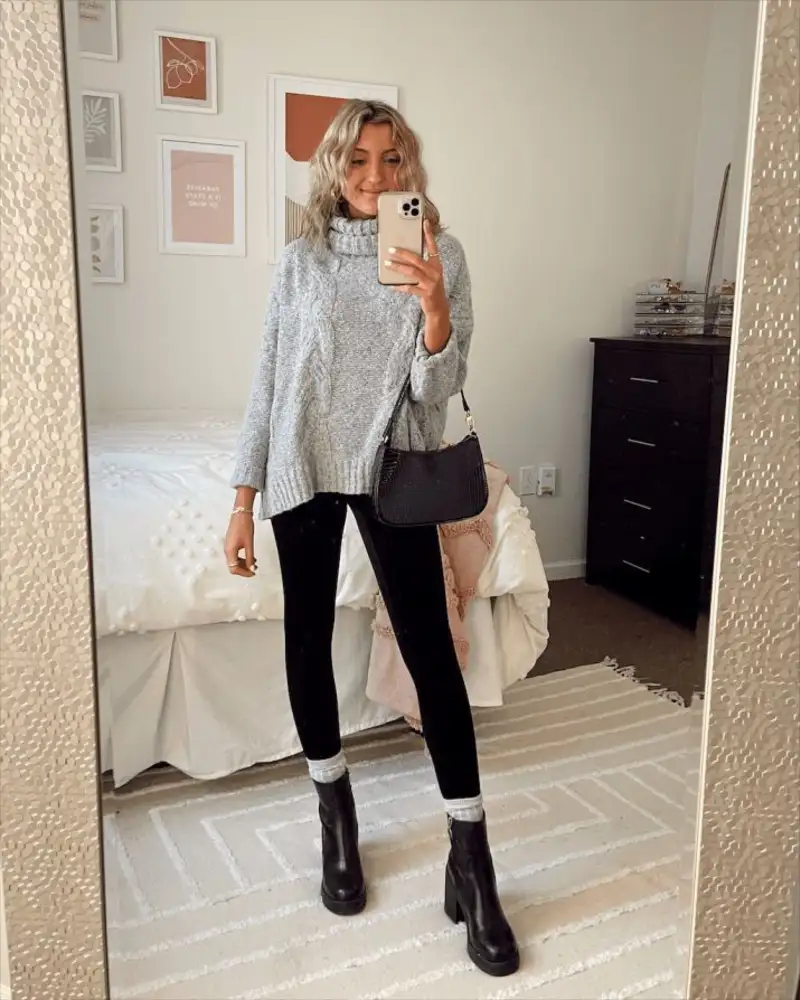
Leggings can work at a pumpkin patch when the upper half has enough length, texture, and structure. Begin with opaque black leggings, then choose a substantial sweater that reaches below the hips rather than a thin top that feels unfinished. Chelsea boots give the slim lower half more visual weight and make the outfit feel grounded.
Their close ankle shape also keeps the line clean, which helps the long sweater look relaxed rather than shapeless. Try a sweater in camel, deep olive, heather gray, or burgundy, and repeat that warm mood with a plaid scarf or simple crossbody bag.
Keep the accessories edited because the contrast between the long knit and narrow leggings already creates the main visual interest. For more waist definition, wear a quilted vest over the sweater and leave it open. The vertical opening draws the eye inward, while the vest adds warmth without making the sleeves feel bulky.
3. Relaxed Jeans, a Fitted Tee, and an Open Flannel Shirt
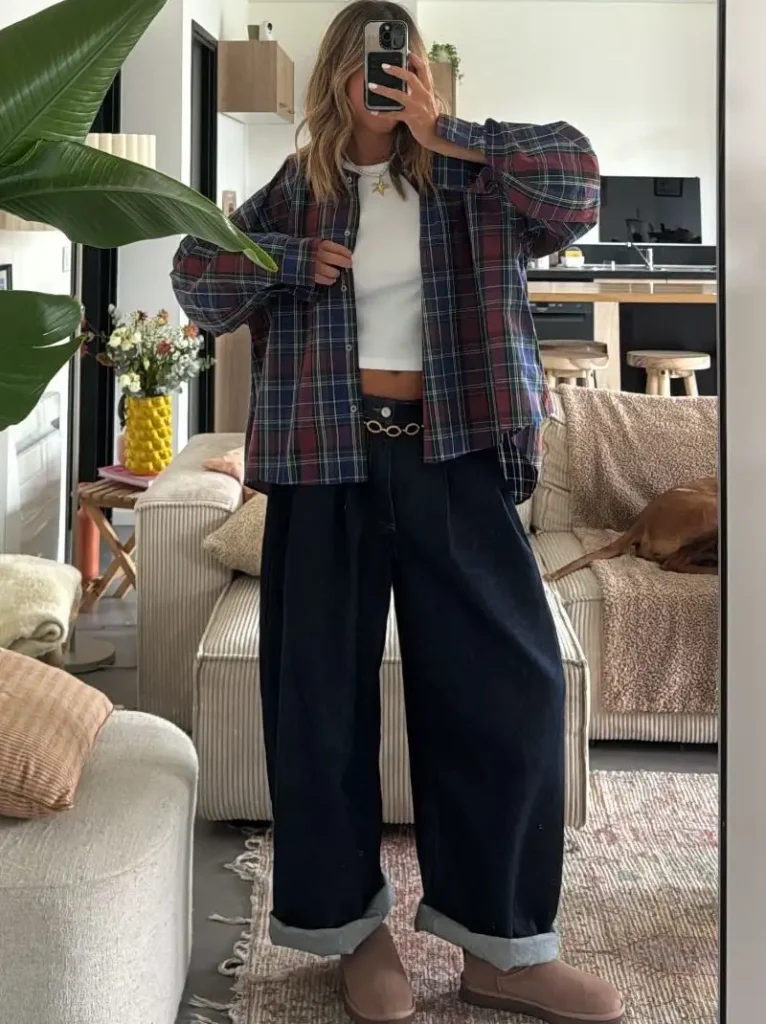
A flannel shirt is an obvious fall choice, but the proportions decide if it looks modern or overly themed. Wear it open over a fitted crew neck tee so there is a clear contrast between the loose outer layer and the cleaner base underneath. Relaxed jeans suit the casual setting, although the hem should still work with your shoes.
A full-length pair can rest lightly over ankle boots, while a cropped pair looks cleaner with low-profile sneakers. Choose a flannel with two or three muted colors rather than a very bright pattern. Cream, brown, forest green, navy, and faded red are easy to repeat through the tee.
Denim, footwear, or a bag that makes the whole outfit feel intentional. A small front tuck can add shape if both the shirt and jeans are roomy. Keep the flannel open so the fitted center line remains visible and prevents the layers from widening the torso.
4. Corduroy Trousers, a Fine Knit Top, and a Soft Cardigan
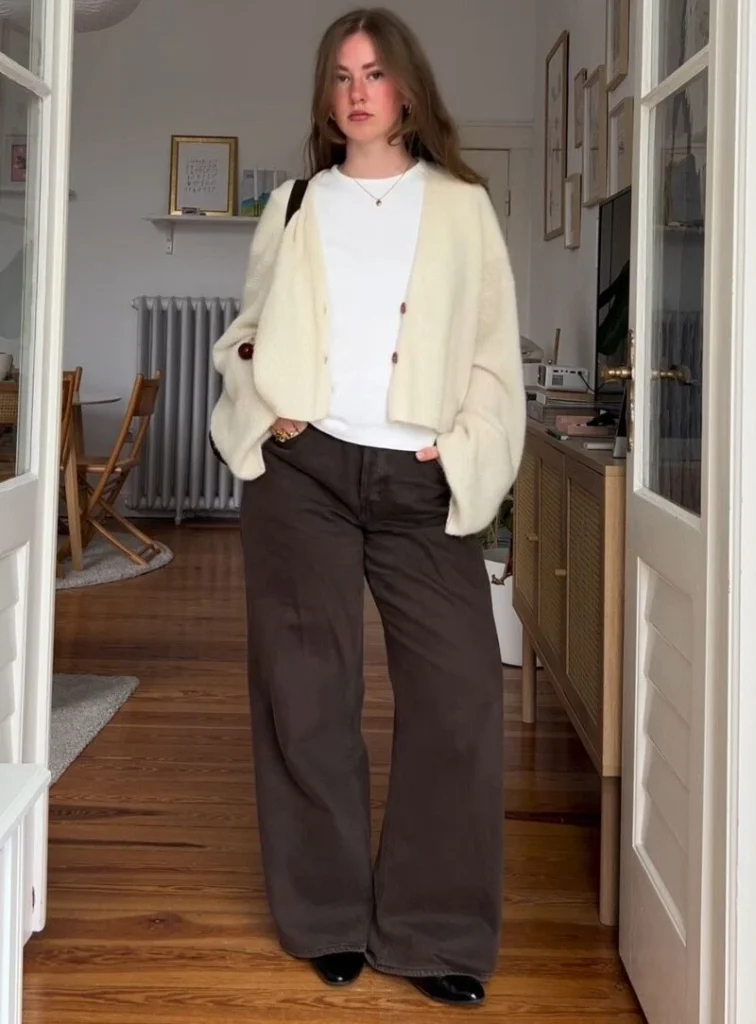
Corduroy gives a basic outfit a strong fall identity without relying on novelty prints or themed accessories. Its vertical ridges add texture, and the fabric carries more visual weight than regular cotton trousers. Pair wide or straight corduroy pants with a fine knit top that sits closer to the body.
This contrast keeps the volume focused on the lower half and lets the trousers become the main feature. Add a soft cardigan that ends near the waist or upper hip. A very long cardigan can compete with wide trousers, while a shorter one keeps the proportions clear and allows the waistband to define the body.
Brown corduroy looks rich with cream or dusty blue, while olive works well with oatmeal or muted rust. Finish with leather ankle boots or sturdy loafers when the ground is dry, and keep the jewelry small so the fabrics remain the focus.
5. A Sweater Dress, Utility Jacket, and Tall Boots
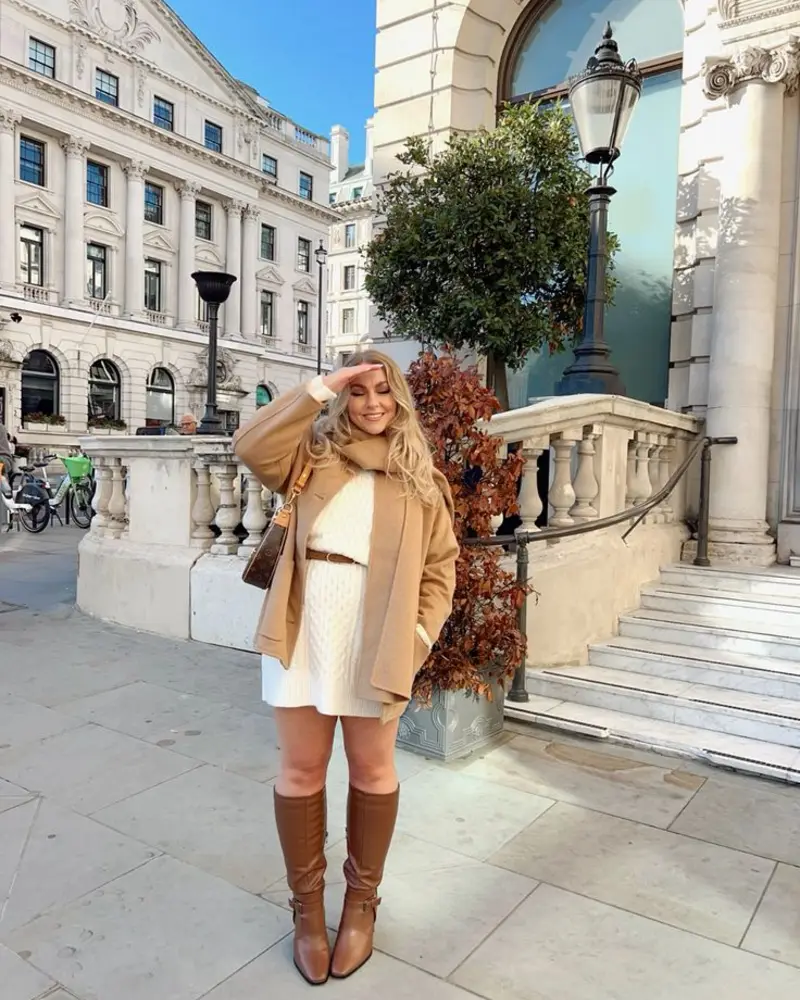
A sweater dress is one of the fastest ways to create a complete outfit because it removes the need to coordinate a separate top and bottom. Choose a relaxed shape with enough room to walk, sit, and bend comfortably.
A utility jacket adds structure and gives the soft dress a practical edge. A jacket that finishes around the waist or upper hip is especially useful because it creates a clear break and keeps the outfit from appearing too long. Tall flat boots protect more of the leg and balance the visual weight of the jacket.
Keep the heel low and the sole stable, since thin heels and muddy paths rarely make a comfortable match. For a quieter look, combine a cream or taupe dress with an olive jacket and brown boots. If you prefer deeper color, try a burgundy or charcoal dress and let the jacket and footwear stay neutral.
6. Dark Denim, a Mock Neck Top, and a Quilted Vest
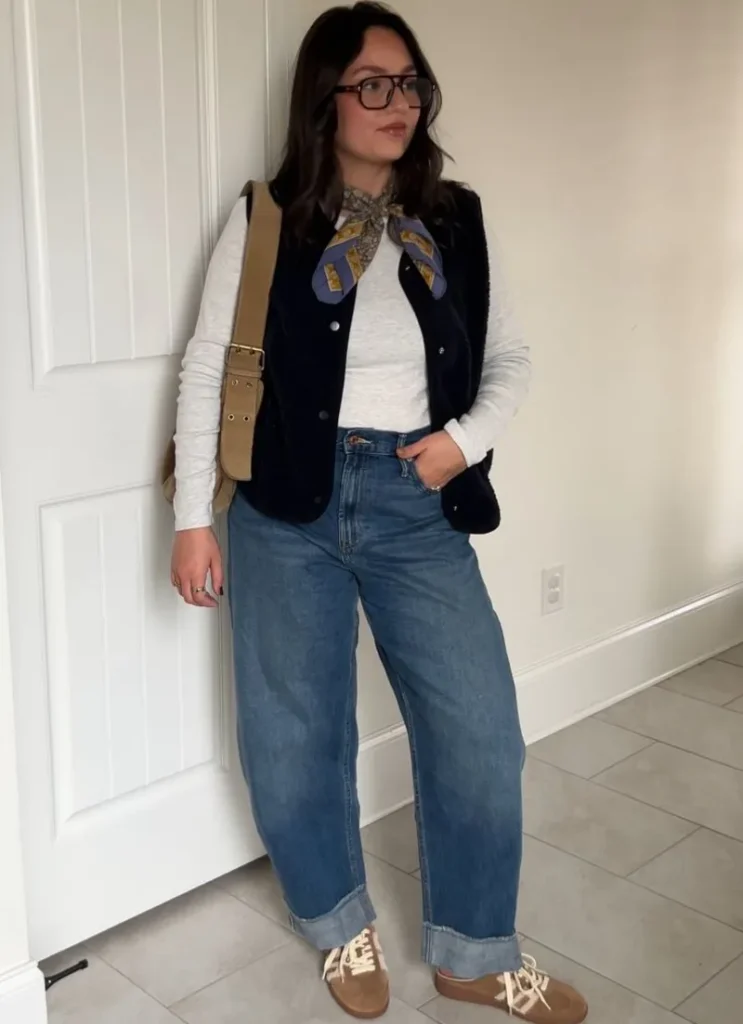
A quilted vest brings warmth to the center of the body while leaving the arms free, which makes it useful on crisp days that are not cold enough for a heavy coat. It also adds texture and shape without hiding the entire outfit.
Wear it over a fitted mock neck or smooth long-sleeve top, then add dark straight-leg denim. The clean base gives the quilting room to stand out, while the dark jeans create a sharper finish than heavily faded denim. Leave the vest open if you want a longer vertical line through the torso.
Zip it partly if you need more shape, but avoid combining a very puffy vest with an equally bulky sweater because the layers can overwhelm each other. Finish with hiking-inspired boots, Chelsea boots, or simple leather sneakers, depending on the weather and terrain.
Use Fall Color Without Looking Overdone
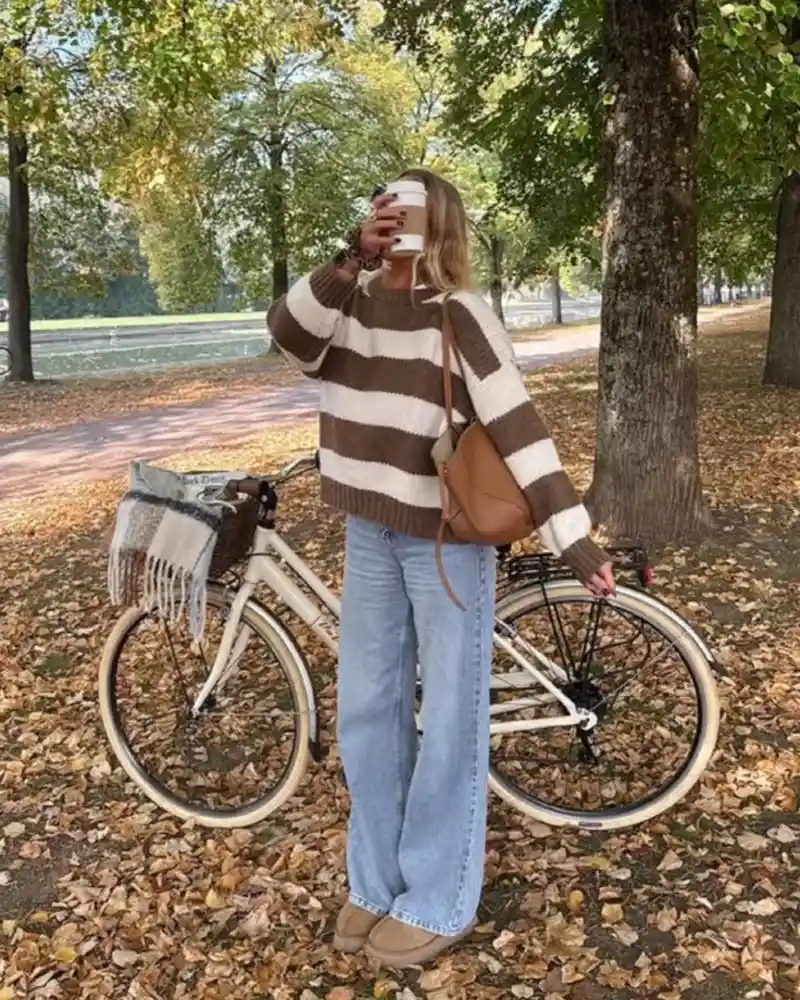
Fall dressing becomes easier when you work with three main colors instead of trying to include every seasonal shade. Begin with one neutral, add one earthy color, and use a darker tone to anchor the outfit.
For example, cream knitwear, blue denim, and brown boots create a soft classic palette. Olive, black, and camel feel richer, while burgundy, charcoal, and taupe produce a deeper look that still feels calm.
Texture can also do some of the work that color normally does. Corduroy, denim, ribbed knits, suede, and quilting make neutral clothing interesting, so you do not need several bold fall shades in the same outfit.
Choose Shoes for the Ground, Not Just the Mirror
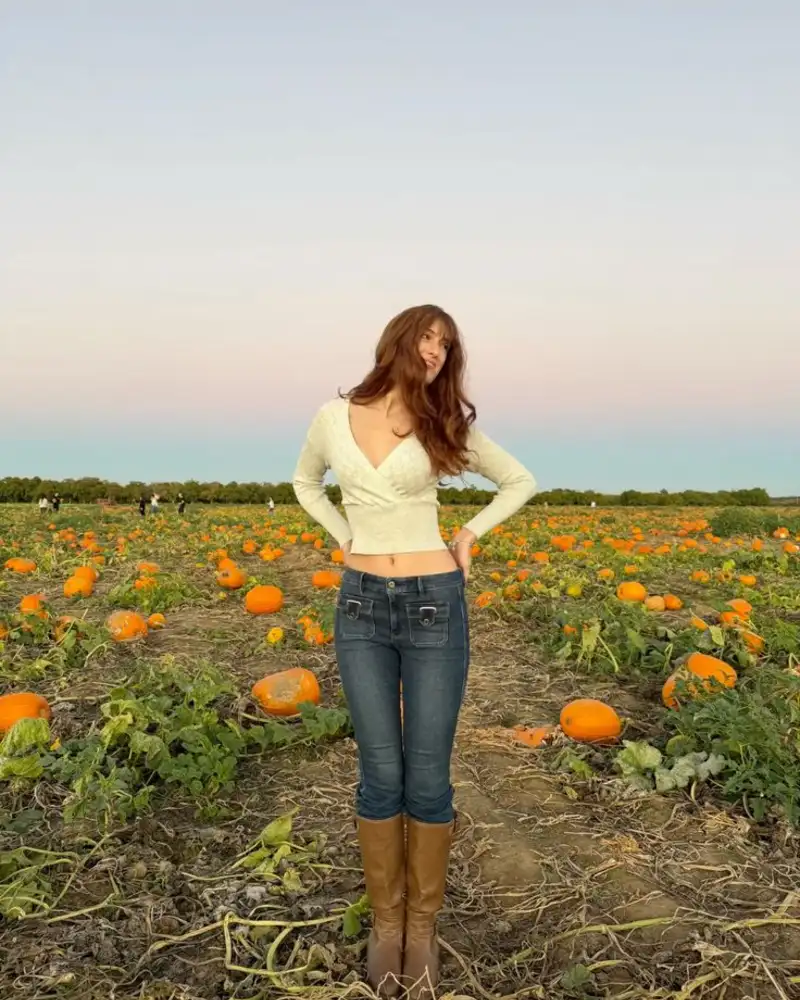
The most stylish outfit can quickly feel wrong when the shoes sink into soft soil or rub after ten minutes of walking. Check the weather and the venue surface before deciding between boots, loafers, clogs, or sneakers.
Flat ankle boots with a textured sole are the safest choice for cool or damp conditions. Leather sneakers work well on dry, firm ground, while loafers and clogs are better saved for paved festival areas or clear forecasts.
The shoe shape should also balance the hem. Slim jeans pair easily with Chelsea boots, while wide jeans need enough shoe showing beneath the fabric to keep the hem from appearing heavy.
Keep Accessories Useful and Photo Friendly
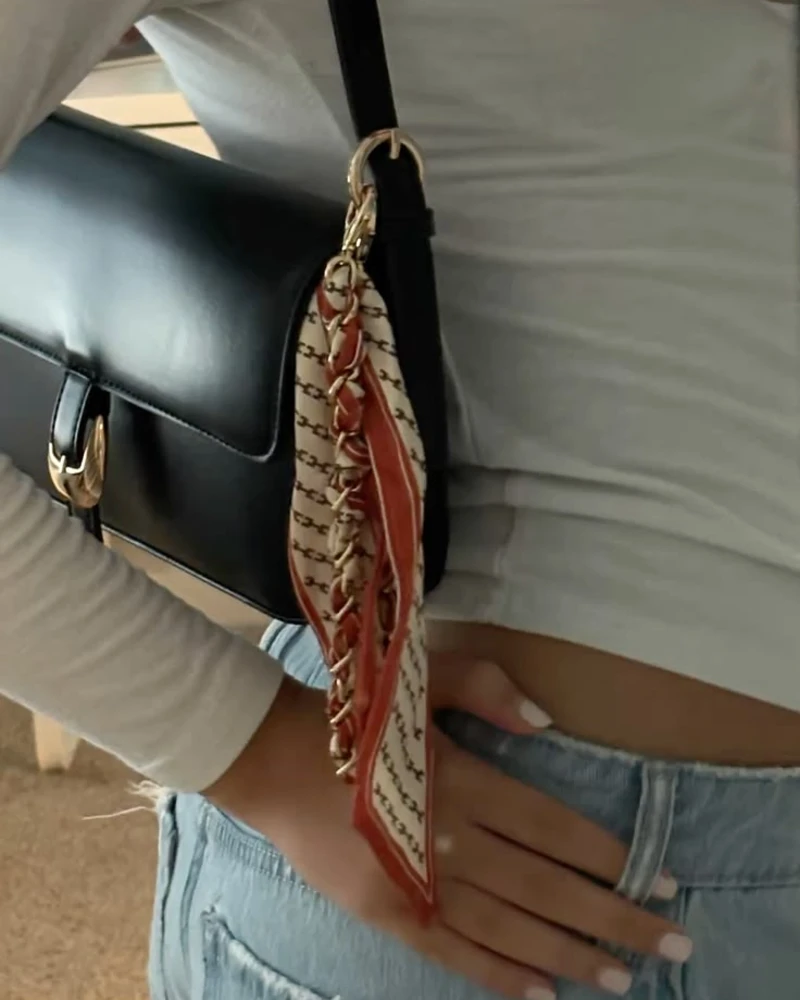
A pumpkin patch outfit rarely needs more than two noticeable accessories. A crossbody bag, textured scarf, simple hat, or small pair of earrings can finish the look without turning it into a fall costume. Choose a crossbody bag that sits close to the body and does not swing while you walk.
If you wear a scarf, keep the knot relaxed and allow part of the sweater or jacket neckline to remain visible so the upper half has breathing room.
The goal is to support the outfit rather than decorate every space. When the clothes already include plaid, quilting, or strong texture, one quiet accessory is often enough.
Your Low Effort Pumpkin Patch Checklist
Before leaving, make sure you can walk comfortably, move your arms, and add or remove one layer. Your bag should leave your hands free, and your shoes should match the actual ground conditions. Then look at the outfit as a whole and remove anything that repeats the same idea.
If you already have a plaid shirt, you may not need a plaid scarf; if the jacket is bulky, the sweater underneath should stay relatively smooth. The strongest pumpkin patch outfits do not depend on buying something new.
They combine practical pieces through clear proportions, autumn texture, and a controlled palette, which creates high style with very little effort.